

Narcissistic hoovering is the stage after a break up or discard when they try to pull you back in. And it works on so many of us, because it targets the part of you that still loves them, still feels responsible for them, or still hopes they meant their promises.
In this post you’ll learn the 10 tactics narcissists use to hoover, the signs to watch for, how to tell hoovering apart from a genuine attempt to reconcile, and what to do when it happens.
What is narcissistic hoovering?
Narcissistic hoovering is a set of manipulation tactics a narcissist uses to pull an ex back into a relationship after a break up or discard.
The name comes from the vacuum brand, because that’s what it feels like. You’ve built some distance, you’re starting to steady yourself, and they attempt to suck you straight back into the narcissistic abuse cycle.
And it doesn’t matter who ended the relationship. If their supply of attention and control runs low, they’ll come back to restock it. (You can find quick definitions of hoovering and related terms on my definitions page).
Why do narcissists hoover?
Narcissists hoover to regain the attention, control and validation they lost when the relationship ended – it’s not because they’ve changed.
A narcissist relies on other people for emotional supply. So when you leave, or they discard you and their new source disappoints them, you become the most familiar place to get their supply from. They know your soft spots, which memories to invoke and which guilt buttons to press, because you handed them that info over months or years together.
Covert narcissists hoover too, just more subtly. Instead of grand gestures you’ll get sad little updates about how badly they’re doing, hints that you were the only one who understood them, and appeals to your sympathy rather than your romance. Same goal, more subtle delivery.
10 narcissistic hoovering tactics (with examples)
The idea behind narcissistic hoovering is to grab your attention. And they’ll go to great lengths to get it. They’ll either appeal to your positive emotions, like your love and hope. Or your negative emotions, like your guilt and fear.
If one hoovering tactic doesn’t work, they’ll switch to another until something sticks. What they’re trying to do, is to tempt you to respond to them. So if you understand what’s going on, you can then decide if it’s wise for you to re-engage with them.
Positive Narcissistic Hoovering Tactics
This is the “nice” version of hoovering. The one that feels extra special when you’re feeling lonely and missing them.
They’ll suddenly become the person you fell in love with again – all charm and sweetness. It’s designed to make you remember the good times, the butterflies, and the way they used to make you feel special.
This approach banks on nostalgia and hope. They know you still have feelings buried somewhere. And they’re betting those feelings are stronger than your logic.
The tricky thing about positive hoovering, is it feels genuine. Like they’ve maybe changed or finally seen the light. And it usually shows up in one of these forms:
1. Love bombing
2. Grand gestures
Grand gestures – like flowers sent to your work, maybe a surprise gift, or a long letter about how much you mean to them – are effective because generosity doesn’t look abusive, so you don’t think to question it. Instead, you think “look at what they’ve done for me, they must really love me”.
My ex pulled off the grandest gesture any man has ever made to me, only days after threatening to end things.
He took me to our favourite spot by the lake, sat me down on some driftwood, and produced a rucksack packed with salmon breakfast bagels and a prepared speech about how he couldn’t fathom a future without me.
He then pulled out a photo-less frame, the photo part replaced with white paper and every plan we’d ever discussed handwritten across it in pencil. Things like travel destinations, couple goals, and moments I’d been fantasising about sharing with him.
He dangled all that hope in front of me and promised I could have it, if I took him back. Which I did. Again. Because the gesture buys back your trust without them ever having to change a single behaviour.
3. Excessive apologies
Narcissists give Oscar worthy apologies where they sound accountable, remorseful and desperate for your forgiveness. Like my ex would apologise after every discard, full of regret and wishing it never happened.
Then, within a couple of months, the same hot and cold cycle would resurface. Because the apology was never about repair – it only ever appeared when he needed me back.
You know an apology is real when their behaviour actually changes afterwards, which is something that never happens with them.
4. Declarations of change
“I’ll go to therapy.” “I’ll get help.” “It’ll be different this time.” These promises sound like accountability, and they’re designed to make you think this time will be different. This is future faking, promising a version of the future they have no intention of delivering.
But words without action are just bait. Someone who means it books the therapy appointment and goes, repeatedly, and without you chasing them.
If you do get drawn back in, (which is quite likely – it happened to me many times) then at least be watching for their actions. Keep note of their promises and time will reveal whether they’ve followed through on them or not.
5. The casual check-in
A breezy “how’ve you been?” text out of nowhere. Or a like on your Insta pic, or a song they’ve sent “because it reminded me of us”. It’s low effort, low risk, and deliberately vague, because it puts the ball in your court.
It gets you thinking about them again and interpreting what these “signs” mean. And if you respond warmly, they escalate. If you don’t, they can pretend it meant nothing.
Any reply at all invites them to think the line back to you is still open. AKA they’ve still got a hold of you and can re-engage with you whenever they like.
Negative Narcissistic Hoovering Tactics
This is the darker side of narcissistic hoovering – the one that makes your stomach churn.
When being nice doesn’t work, they switch tactics to make you feel guilty for having the audacity to leave them. Now they’re angry. Desperate. Sometimes downright nasty.
Some will spread rumours about you. Others will turn up at your workplace uninvited. Or they might even threaten legal action over something completely made up.
This approach preys on your empathy and fear because they know you’re a caring person. So they’ll weaponise that kindness against you.
The goal is the same as positive hoovering – to get a reaction. Any reaction – even negative attention feeds their need for control.
It’s exhausting. It’s scary. And it’s designed to make you think that giving in would be easier than dealing with their behaviour. Below are examples of how this can look:
6. Guilt trips and false accusations
7. Smear campaigns
They recruit friends, family, sometimes your own people, into their version of events to backup their “innocence”. They play the victim, paint you as the villain, and let the social pressure do the hoovering for them. Because if enough people around you take pity on them, you start doubting your own account of the relationship.
Messages may also start arriving through these recruits, like “they’re really struggling, you know” or “they just want to talk”.
What they’re trying to do is paint you like the bad guy. So they’re swaying people’s opinions to match theirs. And they’re intentionally spreading fake info about you to either discredit, control or isolate you.
8. Ghosting, then reappearing
9. Threats of self-harm
Once a narcissist feels like you’re on the verge of leaving for good, they’ll pull out all the stops.
They’ll prey on your guilt as a scare tactic because they want you to feel sorry for them – sorry enough to take them back. So they’re testing your commitment and love for them. And you’ll hear them say things like:
- “I can’t live without you”
- “I’m scared of what I’ll do if you’re not in my life”
- “I’ll end it if you leave”
- “There’s no point in me being here without you”
My friend’s ex even threatened to drive into oncoming traffic if she wouldn’t meet up with her. And what this does is guilt you into staying with them. It’s making you responsible for their feelings and safety, so leaving starts to feel like you’re harming them – because you’re scared of what they might do if you leave.
But love should never feel like a hostage situation. So if they’re using threats to control your actions, it’s a clear sign of manipulation.
While threats of self-harm should never be taken lightly, it’s also not your job to prevent them by staying. So if you’re genuinely concerned for their welfare, contact the authorities or ask their family to check in on them. That covers your concern without handing them control of your decision.
10. Gaslighting
Narcissistic gaslighting during hoovering means denying the reality you know, making you doubt your experiences. And then, ramping it up by making you feel like you’re the one at fault and like there’s something wrong with you.
So they might downplay past events, making you question your memory. Or twist words until you’re left feeling utterly confused. The goal of the gaslighter is to undermine you by devaluing your feelings so that they have complete control over you. Whether this is conscious or unconscious, the effect is still the same.
I used to sense my ex was cheating on me, and every time I raised it he would tell me I was paranoid and disrespectful for even suggesting that. My friend’s ex went a step further and convinced her that her acne medication was causing her paranoia, so she stopped taking it.
So if you feel confused and unsure of yourself around their return, treat that confusion as information. Don’t go back to someone while your head is still spinning.
What Are The Signs of Narcissistic Hoovering?
The main signs of hoovering are sudden reappearances, dramatic apologies, promises to change, guilt trips, and contact that spikes when you move on.
Watch for these patterns:
- They resurface at meaningful moments (like your birthday, anniversaries, right after they hear you’re dating)
- The apology is really over the top and seems genuine, but the behaviour never changes
- Promises to change come with no visible action behind them
- They contact you through other people when you’ve blocked them
- Warmth flips to guilt-tripping or anger the moment you don’t respond
- Their timing tracks your independence, arriving right as you steady yourself
Is it Hoovering or a Genuine Attempt to Reconcile?
True reconciliation comes with changed behaviour, accountability and respect for your boundaries. Hoovering pushes past them to get a response.
The thing with this question is your brain makes it super hard to answer in the moment. Because your brain predicts what’s coming next based on past relationship data. So months of hot-and-cold behaviour have taught it that warmth from this person signals the start of a good phase.
So when they reappear all charming and apologetic, your body floods with relief before your thinking catches up. That relief feels like proof they’ve changed. But it isn’t proof of anything except how strong the old pattern is.
So use behaviour as your test, because it’s the one thing that can’t be faked over time. Someone who truly wants to make amends accepts no for an answer, gives you space without punishment, takes responsibility without listing your faults, and shows sustained change whether or not you take them back.
A hoovering narcissist does the opposite: they escalate when you don’t respond, switch tactics, and pressure you to answer them right away. They don’t give you time to think things through because they don’t want you to realise what’s really happening.

How do You Respond to Narcissistic Hoovering?
The safest response to narcissistic hoovering is no response. Block them, stay no contact, and let their messages go unanswered so the tactics have nothing to grip hold of.
Every hoovering tactic, positive or negative, has the same goal: a reaction from you. Which means your power sits in not providing one. Here’s how to put that into practice:
- Don’t reply. Don’t argue, defend, attempt to get closure, or even try to say “please stop contacting me”. Any reply is a win for them.
- Block them everywhere. Their number, socials and email. Remove photos of you and them together while you’re at it, so nostalgia has less to work with. If you keep unblocking (plenty people do because it’s a process you have to go through), that’s a sign to get more support around you. Because a trauma bond makes staying gone very hard. If you want a guide to follow the exact steps for the moments you’re tempted to reach out to them, grab a free copy of my no contact guide.
- Tell someone. Hoovering thrives in secrecy. A friend who knows the pattern can talk you down when you’re close to caving in to their “what you up to” text. (They probably hate him more than you do, so they’ll be itching to stop you).
- Go low contact if you share kids. Full no contact isn’t an option when children are involved, so keep communication brief, factual and only about the kids. My post on low contact vs no contact covers how to run this without letting the conversation slide from logistics into personal or emotional territory.
- Hold your boundaries. Hoovering works by finding the gaps in them, so decide in advance what you will and won’t tolerate. I’ve written a full guide to setting boundaries after narcissistic abuse which you can download here for free.
- Get support that understands narcissistic abuse. Friends who haven’t lived it can say unhelpful things like “just move on”. A therapist or coach who’s lived this shit knows how to help you unpick why leaving felt so hard, which is often the piece that finally makes no contact stick. Find out how we can work together here.
How long does narcissistic hoovering last?
There’s no fixed hoovering timeline for how long it could last. It often starts within weeks of a discard and can resurface months or even years later, usually when you move on.
Hoovering isn’t a phase that runs out on its own, because it’s driven by their supply levels, not by a calendar. Which means you have the influence to stop it by not letting them have access to you.
Common trigger points for narcissists to hoover you, tend to be things like anniversaries and birthdays, or the end of their new relationship, or any visible sign that you’re doing well without them. Some people hear nothing for a year and then get a “thinking of you” text out of nowhere.
So plan for it rather than waiting for it to stop. If you expect an attempt around meaningful dates, it loses its element of surprise, and an expected hoover is far easier to leave unanswered. Each attempt you don’t respond to gives your brain new evidence that nothing catastrophic happens when you ignore them. Over time, with repetition, that’s what makes staying gone feel less challenging.
Key Takeaways
- Narcissistic hoovering is a set of tactics used to pull you back in after a break up or discard, driven by their need for supply, not by change.
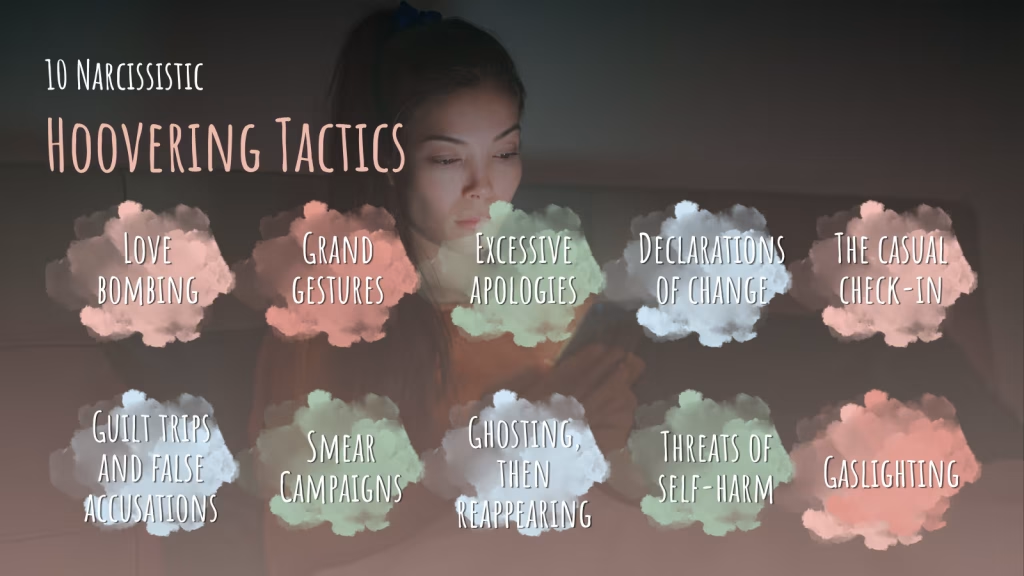
- The 10 main tactics range from love bombing and grand gestures to guilt trips, smear campaigns and gaslighting.
- Genuine reconciliation respects your no; hoovering escalates when you don’t respond.
- The safest response is no response: block, stay no contact, and tell someone who understands the pattern.
- There’s no fixed ending. Expect attempts around anniversaries and whenever you visibly move on.
It ain’t easy to avoid hoovering and it happened to me a lot! But knowledge is your strongest shield. And that’s something I didn’t have when I went through it.
You now know the manipulative tactics narcissists use. And you understand how they attempt to draw you back in. So if you’re armed with awareness, you’ve better protection to stand firm.
Look out for the signs, trust your instincts, and most importantly, focus on your self-worth. You deserve love and respect that uplifts you, not a toxic cycle that drags you down.
If staying no contact is the battle you’re fighting this week, don’t forget to grab my free no contact guide and give yourself a strategy for the wobbly moments.
So I feel like this has been the situation I’m in, but at the same time, he’s telling me I’m the toxic one and narcissistic and I like to gaslight and play the victim, I am really struggling with if I’m the problem, or if he is or it’s just both of us in a terrible situation where we’ve come to a point we can no longer communicate healthy. I read so many things that fit the category of somebody being narcissistic.; but then I read other things and I’m like that’s only partially him, so maybe he just has tendencies that fit in that category… we’ve tried no contact a few times, I’d say two out of the four I am the first to reach out the other two obviously him, a few of my friends tell me that I have a trauma bond and I’m codependent, and I’m a people pleaser and an overthinker, but definitely not narcissistic. Is this guideline fit every person or is it just a few fit and it’s a loss cause that I need to try to stick to and be strong for myself and my kids. I’m really grateful I came across your.support page. Thank you
Thank you for your kind words and highlighting your situation a bit. Firstly, it’s super common to question whether you’re the narcissist, I went through that too. And I’m going to tell you what my therapist told me when I asked her that: the fact that you’re questioning whether you’re a narcissist means you’re not one. Because narcissistic people don’t ask themselves that question, they don’t have the ability to self-reflect like you and I do.
I’d also read up on narcissistic projection as well (this is the link to the blog I wrote on it). Because if he’s telling you you’re a narcissist, he might be projecting onto you. It’s a very manipulative tactic and a way to deflect attention away from them.
Narcissism is a spectrum, and theres lots of different types. It’s an antagonistic personality style. But I wouldn’t worry about what he is or isn’t, and start thinking about how he makes you feel. Like are you confused a lot of the time? Do you feel invalidated? Does it feel like you’re always trying to make the relationship work with very little effort from him? Look for patterns and make a note of things that have hurt you. You need to show yourself tangible proof that you’re not making this stuff up. So it’s better to keep a note of things so you don’t forget – because if you’re being gaslighted, you will forget and you won’t think your memory is reliable.
If you stripped away the diagnosis and only looked at symptoms, there’s a crossover between many of the diagnosis’s. Like a lot of trauma symptoms can actually look like personality disorders if you only compared symptoms. So again, try not to get hung up on the diagnosis because your experience is enough – you’ve lived it.
Narcissistic people are very drawn to personality styles like yours because you’re more concerned with pleasing others over yourself (I’ve been there too). And that’s what they need because they’re after your supply.
In abusive relationships there’s always a perpetrator and a reactor. The reactor can look abusive if you were to only look at a snapshot of a fight where they were the one to lose it. But over time, they’re baited to reach that point (like the frog in boiling water analogy). So you need to look at the bigger picture, identify the patterns and common behaviours over time and what lead you to react.
Trust your friends, they can see things much clearer as they’re not emotionally attached. And if they’re good friends, they want the best for you and are trying to look out for you. I wished I’d listened to mine because they knew all along my ex was bad news.
One of the best things you can do is to start working on yourself. Because the more you know and understand yourself, the easier it’ll get to know what you want and don’t want. When you realise your worth and that you deserve so much more, you won’t want any part of his life. You are enough just by breathing.
A good place to start is by working on your boundaries, I have a free step-by-step guide you can download here with lots of tips and ideas to get you going. Thank you for taking the time to write your comment, I hope this helps you 🤍